

The Risks of Replacing Legal Expertise with AI Advice
Artificial intelligence tools like ChatGPT have quickly become part of everyday life. They can draft letters, summarize documents, and even generate sample contracts. But when it comes to something as personal and complex as divorce, relying on AI for legal guidance can cause more harm than good.
In recent years, many family law attorneys in Georgia have noticed a new challenge. Clients are walking into consultations armed with AI-generated notes, blog excerpts, or case summaries that often misstate the law. Some even arrive convinced that they already know how to handle their divorce because of what they read online. While being curious and informed is admirable, it is important to recognize that ChatGPT is not a lawyer. It cannot give legal advice, interpret Georgia law, or anticipate how a judge will rule.
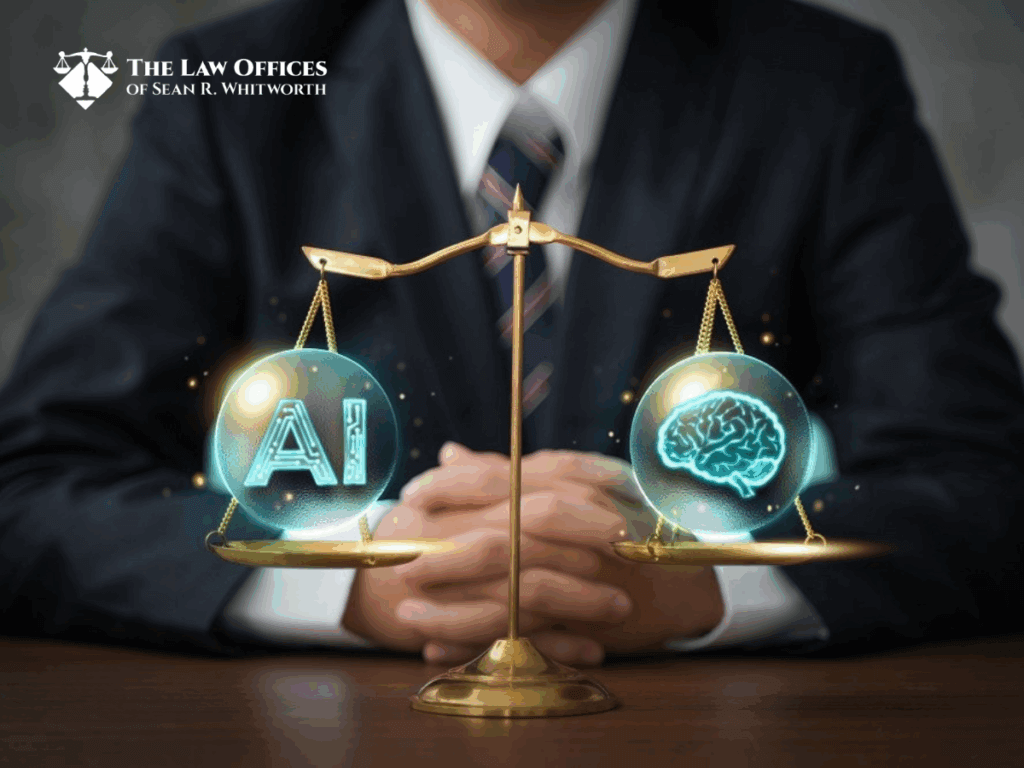
The Rise of AI Legal Information
The convenience of AI makes it tempting to use for everything. Ask a question, and you receive a confident answer in seconds. But AI tools like ChatGPT rely on existing text found online. That means the information you receive may be outdated, incomplete, or simply inaccurate.
Georgia’s family laws are detailed and constantly evolving. Court procedures, filing deadlines, and local judicial preferences all vary from one county to another. What might be true in Texas or California could be entirely wrong in Cobb County. ChatGPT cannot account for those local differences, and it does not access real-time updates from Georgia’s courts or legislature.
Even experienced attorneys must verify laws through official sources such as the Georgia Code, local court rules, and continuing legal education. If trained professionals must double-check every legal citation, it should be clear that AI-generated legal summaries cannot be trusted for something as serious as a divorce or custody case.
When AI Creates More Confusion
Some clients unknowingly harm their own cases by following AI advice. They might file incorrect forms, misinterpret deadlines, or demand unrealistic results because a chatbot told them “the law says” something that is not accurate. Others come to consultations expecting their attorney to follow a strategy based on an online prompt rather than professional judgment.
This not only slows down the legal process but can also damage the attorney-client relationship. A divorce is already an emotional experience. When clients rely on information that is not grounded in Georgia law, it creates unnecessary conflict and confusion.
Courts across the country have even begun sanctioning attorneys who use ChatGPT without verifying the accuracy of its responses. Several cases have shown that AI-generated briefs contained made-up citations that never existed. If licensed attorneys can fall into

The Value of Human Judgment
Family law is not just about legal codes. It is about people, emotions, relationships, and the lasting impact of decisions involving children and finances. Artificial intelligence cannot assess the emotional dynamics between parents or the credibility of witnesses in court. It cannot anticipate how a particular Georgia judge may view a child custody modification or a request for spousal support.
Attorney Sean R. Whitworth’s approach is grounded in both legal knowledge and human understanding. With nearly twenty years of experience handling family and divorce cases across metro Atlanta, he has developed a deep awareness of what truly matters in Georgia courtrooms.
AI may be able to mimic legal reasoning, but it cannot replace intuition, compassion, and the ability to negotiate under pressure. A lawyer’s experience is shaped by countless interactions with judges, mediators, and opposing counsel. These human factors determine the outcome of cases more often than any algorithm or online article ever could.

The Dangers of Overconfidence
Perhaps the most concerning issue with AI in law is overconfidence. ChatGPT presents information with absolute certainty, even when it is wrong. It does not show doubt, it does not explain local exceptions, and it does not warn you about consequences.
Divorce cases involve critical decisions about child custody, visitation, property division, and financial stability. A misunderstanding of even one legal term can lead to irreversible mistakes. Georgia law includes complex formulas for calculating child support and evaluating marital versus separate property. These are not one-size-fits-all calculations, and every family’s situation is different.
When clients rely too heavily on AI instead of their attorney, they risk making choices that hurt their long-term interests. The goal of an experienced family law attorney is to protect those interests by combining legal strategy with real-world insight.
Working With Your Attorney, Not Against Them
Technology can be helpful when used responsibly. It can help clients ask better questions, stay organized, and understand basic terms. But it should never replace an experienced attorney. The best results happen when clients trust their legal professional, share accurate information, and follow advice grounded in real Georgia law.
At The Law Offices of Sean R. Whitworth, we encourage clients to stay informed, but we also remind them that every case is personal. Your divorce, custody, or support matter is not a template. It is a life decision that requires knowledge, negotiation skill, and emotional intelligence.
If you are facing divorce or family law issues in Marietta or the greater Atlanta area, do not rely on AI to make legal decisions for you. Work with a professional who understands both the law and the human element that shapes its outcome.
Request your consultation today. Submit the form below to get started.
Appointment Request
"*" indicates required fields